AISEN: A MARKETPLACE FOR SENSOR DATA
A data marketplace offering a wide range of sensor data to aid startups and government institutes in developing smart city solutions.

MY ROLE
The team composed of 5 talents: a product manager, two software engineers, an AI specialist and an interaction designer (myself). As the interaction designer, I took the responsibility to plan the project together with the product manager, conduct user research and testing, and create the user interface.
THE CHALLENGE
Startups and government institutes interested in building smart cities lack sufficient data that they need. The companies Nokia, SAP and Infineon have the ability to gather data using existing technologies. The challenge is: how to utilize the existing technologies in order to support the startups and government organizations in need of sensor data.
THE PROCESS
The sketch below shows a simplified version of the steps taken during the entire project.

Overview of the steps
SCIENTIFIC RESEARCH AND MINDMAP
Identifying the problem area was our first step. We did scientific research to find out existing problem areas. The mindmap helped us to identify the interdependencies of the different problem areas.

Mindmap based on scientific research
INTERVIEW AND PROBLEM DEFINITION
We then conducted interviews to validate the problem areas and understand our user's needs. One of our user group were amongst the upper management of government organizations, which was difficult to access. Co-operating with our partner companies helped us to find contacts through their vast network. Also during the validation of the problem areas, our potential users were reluctant to share information with us. This was a challenge we had to overcome. With the findings from the interviews, we defined the problem statement for our user groups.
SOLUTION CONCEPT
The next step was to brainstorm and produce solution concepts, which then were validated using the Lean approach. A validation board was used to keep track of our assumptions and results. We then created storyboards to communicate our concept to our company partners and externals.


Storyboarding - Sensor box (left) and online platform (right)
PROTOTYPING AND TESTING
We designed a low-fidelity paper prototype of the online platform and tested it with stakeholders. We also 3D printed a sensor box and assembled it with various weather and motion sensors, and tested it's possible location outdoors and it's functionalities.


Paper prototyping
Based on the feedback from the stakeholders on the low-fidelity prototype, I designed the digital prototype of the online platform.
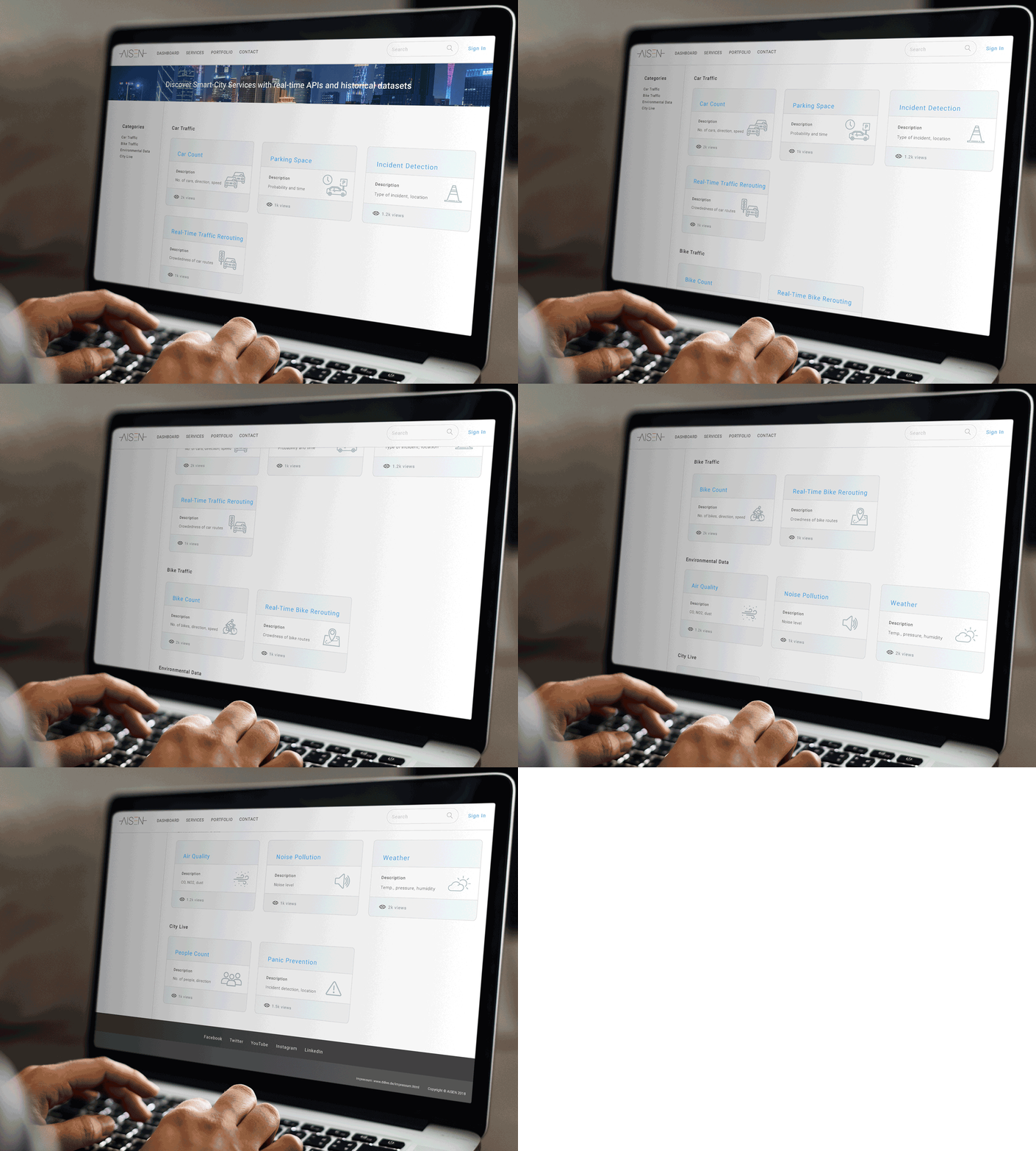
Digital prototype AISEN homepage
As the final outcome, the validated concept (the online platform and the sensor box) to support startups and government institutes in creating smart cities with sensor data was pitched at the Digital Product School. It successfully received positive feedback from the company partners as well as our potential customers. The three partner companies Nokia, SAP and Infineon decided to collaborate and continue working on the project.